

RTG Alignment Rollers for Trolley Rail Protection
Valencia, Spain
Problematic
In port operations, Rubber Tyred Gantry (RTG) cranes play a critical role in handling containerized cargo. However, a common issue with RTGs is the excessive wear of trolley rail surfaces due to direct contact with wheel flanges. It was the case for CSP Valencia Port in Spain. Over time, this results in costly maintenance and potential operational disruptions. To address this issue, Gantrex was contracted by the Valencian Port to design and install RTG alignment rollers that would prevent wheel flanges from grinding against the rails, thereby extending rail longevity and reducing overall maintenance costs.
The Gantrex Solution
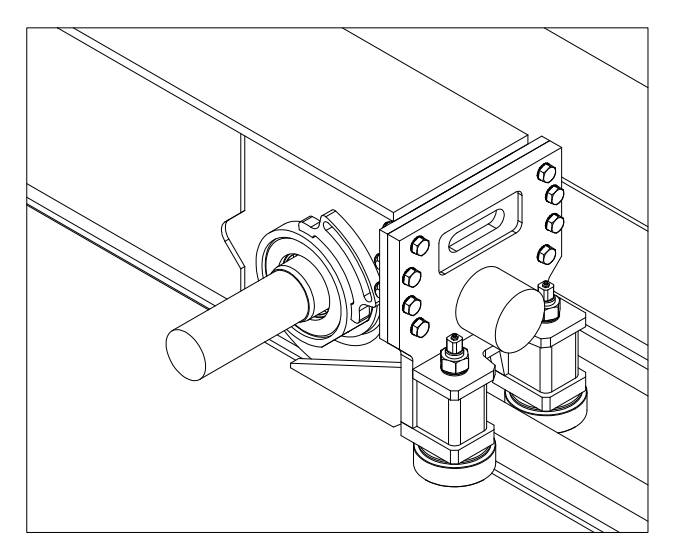
Gantrex leveraged its expertise in crane rail solutions to design and manufacture specialized alignment rollers and housing systems. The key challenge was adapting these rollers to the various RTG models available in the market, as most manufacturers had not previously incorporated such components into their designs.
To overcome this, Gantrex collaborated closely with CSP Valencia Port as well as with other key customers and industry stakeholders to develop a standardized yet adaptable solution that could be retrofitted onto older RTG models while also being seamlessly integrated into new crane designs. This ensured that both existing fleets and future RTG cranes could benefit from enhanced trolley rail protection.

Outcome
The installation of the Gantrex RTG alignment rollers has been highly successful, with all deployed systems meeting or exceeding expectations from CSP Valencia. The rollers have significantly reduced trolley rail wear, leading to lower maintenance costs and increased operational efficiency for RTG crane operators.
This project reinforced Gantrex’s reputation as an innovator in crane rail solutions, highlighting its ability to enhance equipment longevity through research-driven improvements. The lessons learned from this project have further underscored the importance of continuous development in minimizing wear and tear, ultimately leading to better long-term solutions for port operations worldwide.